
The IT major is followed by RIL (Rs 795,628.55 crore), HDFC Bank (Rs 624,362.11 crore), Hindustan Unilever (Rs 367,880.69 crore) and ITC (Rs 367,513.78 crore).

Continuing its decline for the third day on Friday, the BSE gauge plummeted 1,214.96 points or 2.20 per cent to 53,887.72 during the day. It settled at 54,333.81, a decline of 768.87 points or 1.40 per cent.

Top companies reported that despite most of them making staples and essential products, movement of raw material, goods and labour remained restricted, impacting sales.

The FMCG sector is generally considered to be a safe haven during difficult times as people never stop buying soap and toothpaste. However, weak rural and semi-urban demand has been a factor since the lockdowns of 2020-21 while rising inflation has also impacted margins. While the FMCG majors have survived on the basis of price hikes and good management practices, they have seen growth slowdowns and experienced margins being squeezed as raw materials and transport costs rose. The FMCG sector witnessed positive volume growth in the fourth quarter of the 2022-23 financial year (Q4FY23) after five consecutive quarters of decline, and the rebound in demand was led by urban markets.

Market experts say that of the total 600,000 villages in India, under two per cent or around 10,000 villages contribute to about half of the rural consumption in the country. Targeting these villages and ensuring that penetration is strong is key for most consumer goods companies.

The recent sell-off in IT stocks such as Infosys and Tata Consultancy Services (TCS) has resulted in a sharp decline in the IT sector weighting in the Nifty50 index. The sector's weighting in the index has slipped to a five-year low of 12.2 per cent, down from the 17.7 per cent at the end of March 2022. The top IT companies - TCS, Infosys, Wipro, HCL Technologies, and Tech Mahindra - accounted for 13.6 per cent of the index at the end of March this year.

The combined market valuation of six of the 10 most valued companies surged by Rs 1,56,247.35 crore last week, with Reliance Industries Ltd (RIL) emerging as the biggest gainer. While RIL, Tata Consultancy Services (TCS), HDFC Bank, ICICI Bank, HDFC and Bajaj Finance saw gains in their market capitalisation (m-cap) in the holiday-shortened week, Infosys, HUL and LIC suffered losses. Stock markets were closed on Tuesday on account of Muharram.

Reliance Industries accounted for Rs 6.3 trillion in wealth created since 1995; closest rival was Hindustan Unilever which was at Rs 4.9 trillion.

ITC's net profit grew the fastest, followed by HUL and Asian Paints.

Two giant brands get into a slugfest over the goodness of ice creams and frozen desserts, reports Sohini Das.

Footfalls will invariably come down to a trickle even after lockdown restrictions go away, and the only way to prevent someone else from poaching your consumer is to go down to the consumer herself. Consumers will prefer products and services to be delivered to their doorstep, hygienically and safely.

India will be the global host this year for World Environment Day, with the theme "Beat Plastic Pollution".

Despite near-term headwinds of rising input costs and the possibility of lower demand for products as Covid dented rural & urban India, and impacts both production & consumption, analysts remain bullish on stocks of fast moving consumer goods (FMCG) companies and expect the index to relatively outperform its peers in the second half of fiscal 2021-22 (FY22). In the past one year, prices of key commodities such as groundnut oil, mustard oil, Vanaspati, soya oil, sunflower oil and palm oil have shot up in the range of 20 per cent to 60 per cent, data show. The FMCG sector macros in this backdrop, according to analysts, have further deteriorated because of weakness in consumer demand and likely margin pressure due to elevated crude oil, palm oil and global food prices.

The market capitalisation of BSE-listed firms reached an all-time high of Rs 288.50 lakh crore on Wednesday amid an ongoing rally in equities, as the benchmark Sensex settled above 63,000-level for the first time ever. The 30-share BSE barometer climbed 417.81 points or 0.67 per cent to settle at 63,099.65, its fresh record closing high. During the day, the benchmark jumped 621.17 points or 0.99 per cent to 63,303.01, its lifetime intra-day peak. Extending its winning momentum to seventh day, the Sensex has rallied 1,954.81 points or 3.19 per cent during this time.

The open offers for the shareholders of Ambuja Cements and ACC will begin from July 6 and close on July 19, as per a tentative schedule published by the Adani family today. With an investment of $4 billion (Rs 31,139 crore), together these two open offers might constitute the biggest open offer in corporate Indian history. The mandatory open offer for the companies was made by a Mauritius based company owned by the Adani family after they acquired a 63 per cent stake in Ambuja and 4.5 per cent in ACC from Swiss cement major, Holcim for $6.5 billion. Ambuja owns a 50 per cent stake in ACC.

Equity benchmark Sensex rallied 936 points on Monday, helped by heavy buying in banking and IT counters along with decline in oil prices amid hopes of headway in renewed diplomatic talks between Russia and Ukraine. A fresh round of talks is expected on Monday between Ukrainian and Russian officials. Rising for the fifth straight session, the BSE Sensex jumped 935.72 points or 1.68 per cent to settle at 56,486.02.

The Sensex came under fag-end selling pressure to close in the red for the sixth straight session on Friday as risk-off sentiment prevailed amid unabated selling by foreign institutional investors and concerns over inflation. The 30-share BSE benchmark pared all intra-day gains and declined 136.69 points or 0.26 per cent to end at 52,793.62. During the day, it had rallied 855.4 points or 1.61 per cent to 53,785.71. On similar lines, the broader NSE Nifty dipped 25.85 points or 0.16 per cent to settle at 15,782.15.

...followed by financial services, IT, and sales and marketing.

Adani Enterprises' proposed Rs 20,000 crore (Rs 200 billion) fundraising via fresh issue of equity shares through a public offer would be the fourth biggest by Indian companies, excluding banks and non-banking financial companies.
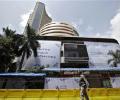
Reliance Industries was the only stock which defied the broader market trend

Higher prices are burdening household budgets and threatening the margins of leading manufacturers.

The upgrade, said Icra, takes into account the "robust internal accrual generation, leading to low reliance on debt, as well as gearing levels, and strong debt protection metrics".

In May, Satpal Singh, who runs a dairy business with three buffaloes in Jewar, near Noida, was worried about the steep spike in input costs. Singh said dry fodder rates, which cost Rs 1,500-2000 per tractor trolley last year, were quoting at Rs 4,500-5,000. The price of other cattle feed ingredients (that include mustard meal and similar mixes) had also gone up from Rs 2,000 per quintal to Rs 3,100-3,200 per quintal.

After a gap of five years, Hindustan Unilever has bagged slot zero position on B-school campuses. In 2007, the company had slipped to number 14 on the recruiters' list of B-schools. "It's an improvement of our brand value and affirmation of our employer brand," says Leena Nair, executive director HR, Hindustan Unilever.
Besides, the ongoing war between Russia and Ukraine has also added another blow to FMCG makers as they expect a rise in the prices of wheat, edible oil and crude. Companies such as Dabur and Parle are watching the situation and will undertake calibrated price increases to mitigate the inflationary pressures.

Beauty and Personal Care (BPC) e-retailer Honasa Consumer's initial public offering (IPO) has failed to find backing from analysts due to the company's weak financial track record and expensive valuation. T Manish, research analyst at Samco Securities suggests avoiding the IPO as the company's financial performance does not inspire confidence. "The profit has been inconsistent and advertising and marketing expenses are incredibly high at around 40 per cent of the revenues.

Tea estates across Assam and West Bengal, which were hitherto closed owing to the lockdown, opened in April.

Of the 16 FMCG firms, 12 companies saw an increase in their respective foreign institutional investors holding in three months ended September 2013 over the year-ago period, while the remaining four witnessed a decline in FIIs stake, according to a report by A C Choksi Share Brokers.

While the company did not reveal its profit or loss for the period, according to its fillings, food and beverages was the largest category - accounting for 62.23 per cent or Rs 5,184 crore of its total sales.
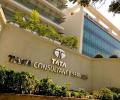
The market capitalisation of Tata Consultancy Services (TCS) on Wednesday breached the Rs 13.5 lakh crore mark -- the second company after Reliance Industries Ltd to achieve the feat. At close of trade, the market valuation of TCS stood at Rs 13,53,667.85 crore on BSE. The company had touched the Rs 13 lakh crore valuation level on August 17, when its market capitalisation (m-cap) stood at Rs 13,14,051.01 crore.

Investors' wealth zoomed by Rs 5,78,634.72 crore in two days of intense market rally, with participants adding Rs 2,74,908.83 crore to their fortune on Tuesday. Over the past two sessions, the BSE gauge Sensex has gained about 1,461 points or 2.99 per cent. The benchmark rallied 612.60 points or 1.24 per cent to settle above the 50,000-mark on Tuesday. Following the two-day massive rallies, the market capitalisation of BSE-listed companies jumped by Rs 5,78,634.72 crore to a record Rs 2,16,39,367.91 crore on Tuesday.

The government's new initiative appears to be timely for health and hygiene players, battling low awareness and the lack of use of branded products.
FMCG stocks have underperformed the market, falling 2.2 per cent so far in 2014.

HUL, ITC, Nestle, Colgate, Dabur, Britannia, Asian Paints, P&G are trading at nearly 48 times. The previous record high was 53 times at the end of March 1994.

According to BSE, Bharti Airtel's revenue (on a standalone basis, excluding that from foreign operations and their subsidiaries) stood at Rs 49,919 crore (Rs 499.19 billion).
Growth numbers for the large players in the sector, though, improved during the quarter.

The first quarter earnings season will dictate the trend in the equity markets in this holiday-shortened week amid absence of major macroeconomic drivers, say analysts. Besides, lacklustre global markets may increase volatility in the market, they added. Equity markets would remain closed on Wednesday for Bakri-Id.

Investor wealth surged Rs 602,001.9 crore in two days of market rally which was supported by positive global cues. The 30-share BSE index on Tuesday closed at 50,136.58, an increase of 1,128.08 points or 2.30 per cent. During the day, it gained 1,259.95 points to touch 50,268.45. On Friday, the benchmark had closed 568.38 points higher. Markets were closed on Monday for Holi. Driven by the rally, the market capitalisation of BSE-listed companies soared Rs 602,001.9 crore to Rs 2,04,77,472.33 crore in two trading days.

Company may look at 5-6 launches a year as the market for premium and niche products grows

Irrespective of demonetisation and GST blues, IIM Lucknow has been able to successfully place their batch of 459 students.
